ADAS calibration after a windscreen replacement
Most vehicles built in the last several years carry a camera mounted behind the windscreen, just in front of the mirror. It is the eye for lane keep assist, lane departure warning, autonomous emergency braking, adaptive cruise control and traffic sign recognition, and it works by knowing exactly where it is pointing. That aim is set relative to the glass it looks through. Fit a new windscreen and the camera is now looking through slightly different glass at a slightly different angle, and until it is recalibrated it may misjudge distances and lane positions without telling you anything is wrong. Recalibration is the manufacturer's requirement, not an optional extra, and it is the part of a windscreen replacement that is easiest to leave out and hardest for a customer to check. We perform dynamic calibration as part of the replacement visit. Where your vehicle needs static calibration instead, we still fit the glass and the calibration itself goes to a dealership, and we tell you that before we book rather than after.
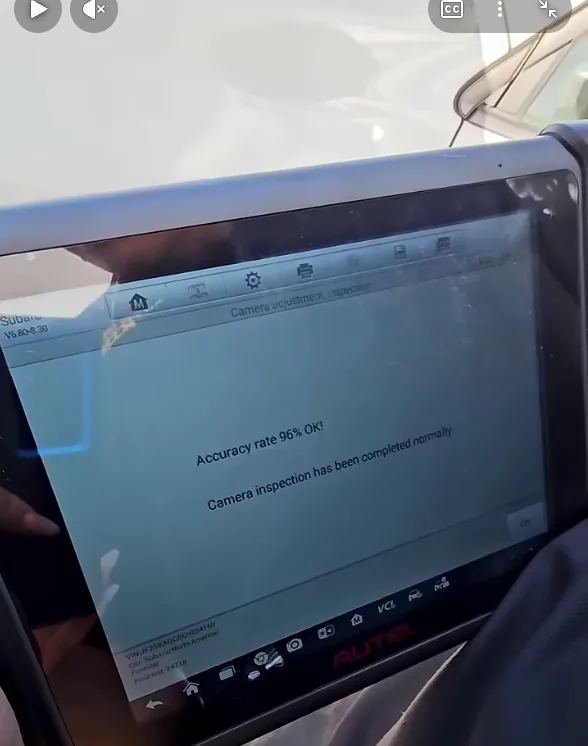
When calibration is required
Any time the windscreen is replaced on a vehicle with a forward facing camera behind the glass, that camera needs recalibrating. It is also commonly required after work that changes the vehicle's ride height or wheel alignment, after a front end repair, and after the camera itself is removed or replaced, because all of those change where the camera is pointing relative to the road. A chip repair does not require it, because the original glass stays in place and the camera is never disturbed. Cameras behind the windscreen became common on vehicles sold in Australia from around 2017 onwards, but there is no clean cut off, and the same model can be built with and without one depending on build date and specification.
- After any windscreen replacement on a camera equipped vehicle
- After front end repairs or suspension changes
- Not required after a chip repair
- Common on Australian vehicles from around 2017
- Determined by build date, not just model year
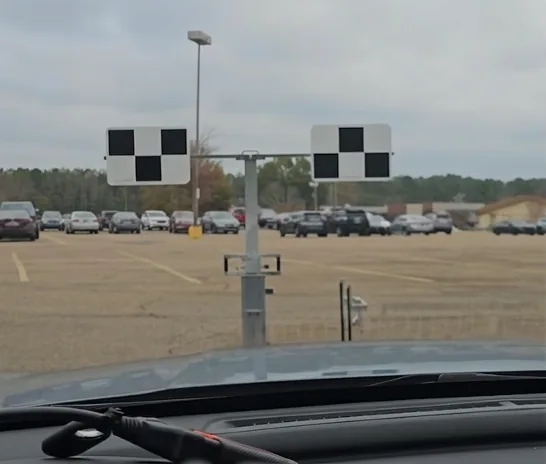
Static and dynamic calibration, and which we do
There are two procedures and they are not interchangeable. Static calibration is done with the vehicle stationary, using manufacturer specified target boards placed at measured distances in front of it, on a level floor with even lighting and clear space around the vehicle. Dynamic calibration is done by driving the vehicle on a road at a steady speed with a scan tool connected, letting the system learn against clear lane markings in reasonable weather. Some vehicles require static, some dynamic, and some need both performed in a set order, and which one applies is specified by the manufacturer for that vehicle rather than chosen by the workshop. We perform dynamic calibration, which is why it fits inside a mobile visit: the scan tool travels with the technician and the road is the rest of the equipment. We do not perform static calibration, because it needs a level, evenly lit floor and measured clear space for target boards, which is a workshop and not a driveway. Where the manufacturer specifies static calibration for your vehicle, we still replace the glass and the calibration alone goes to a dealership. You are not being turned away, and you are not being left to work it out either: we establish which procedure your vehicle needs from the build date when you book, and tell you before the job rather than on the day.
- Static uses manufacturer targets on a level, evenly lit floor
- Dynamic uses a road drive with a scan tool connected
- We perform dynamic calibration, as part of the same visit
- We still fit the glass on a static calibration vehicle
- Only the static calibration itself goes to a dealership
- The manufacturer sets which applies, not the workshop
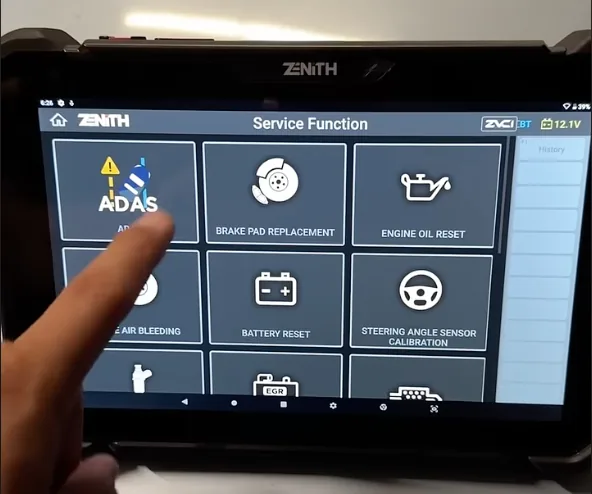
How the calibration runs on the day
A dynamic calibration is a road drive, and it happens after the new glass is in and the adhesive has cured, because the vehicle cannot be driven before that. The technician connects a scan tool, drives the vehicle at a steady speed on suitable roads, and lets the system relearn against clear lane markings. That drive is a large part of why a replacement with calibration runs to about three hours on site rather than two and a half. It also comes with conditions, in the same way the fitting does: the procedure needs reasonable weather, lane markings clear enough for the camera to read, and traffic that allows a steady speed to be held, so heavy rain or a stretch of worn markings can stop it. A calibration either completed or it did not, and you are entitled to know which. If it cannot be finished on the day, whether because of the conditions or because a fault elsewhere in the vehicle is preventing it, we tell you plainly and arrange to complete it rather than handing the vehicle back with its safety systems in an unknown state.
- A road drive with a scan tool, once the adhesive has cured
- Needs clear lane markings, reasonable weather and a steady speed
- Part of why a replacement with calibration is about three hours
- Told plainly if it could not be completed
- Finished properly rather than handed back in an unknown state
If your vehicle needs a static calibration, read this part
This is the one situation where the job is not finished when we drive away, and it matters enough to say on its own. We will have fitted your new windscreen correctly and it will be safe to drive. What will not yet have happened is the calibration, so until the dealership carries it out, the camera behind that glass is aimed at the old screen rather than the new one. The systems will not switch themselves off and, as the second point at the top of this page says, a misaimed camera usually shows no warning light at all. Lane keep assist may read a lane edge that is not where it thinks it is, and automatic emergency braking may react late or to nothing. So book the calibration promptly, and until it is done, drive the vehicle as though those systems are not there. We will tell you at the booking that yours is a static calibration vehicle, so you can line the dealership up rather than finding out afterwards.
- The glass is fitted properly and the vehicle is safe to drive
- The camera is not calibrated until the dealership does it
- No warning light will tell you it is outstanding
- Treat the assistance systems as unavailable until it is done
- You are told at booking, not after the job
Why calibration is not optional
Aim is set against the glass
New glass means a new reference, so the camera has to be re aimed to it.
A wrong aim fails quietly
Systems can misjudge lane position or braking distance with no warning light.
Done to the manufacturer procedure
Which procedure applies is set by the maker for that specific vehicle.
Included where we do it
No separate charge for a dynamic calibration on a vehicle that needs one.
Get a free quote
Tell us the make, model and build date and we can tell you what your vehicle needs. Build date matters more than model year here, because the same model is often built both with and without a camera depending on when it left the factory, and because it is what decides whether the manufacturer calls for a dynamic calibration or a static one. If you are not sure, attach a photo taken from inside the vehicle looking up at the top centre of the windscreen just in front of the mirror. If there is a camera housing there, calibration is part of the job.
Service available across every Sydney region
Central and Inner Sydney
Sydney CBD, Circular Quay, The Rocks, Surry Hills, Darlinghurst, Kings Cross, Newtown, Marrickville, Enmore, Alexandria and Waterloo
The East and Northern Beaches
Bondi, Coogee, Maroubra, Manly, Dee Why and Narrabeen
North Shore and Northern Suburbs
Mosman, Chatswood, North Sydney and the Hills District including Baulkham Hills
South and West Sydney
Cronulla, Hurstville, Brighton Le Sands, Parramatta, Penrith, Campbelltown and Camden
Frequently asked questions
Do I really need ADAS calibration after a windscreen replacement?
If your vehicle has a camera behind the windscreen, yes. The camera's aim is set relative to the glass, so replacing the glass changes the reference it was calibrated against. Vehicle manufacturers require recalibration after a windscreen replacement for this reason. It is not an upsell and it is not optional on a vehicle that has the hardware.
What happens if the calibration is skipped?
The systems keep operating, which is the problem. A camera that is aimed slightly wrong can misjudge lane position or the distance to the vehicle ahead, so lane keep assist may steer against a lane edge that is not where it thinks it is, and automatic emergency braking may react late or react to nothing. There is often no warning light, because the system does not know it is misaimed. That is what makes skipping it hard for a customer to detect.
What is the difference between static and dynamic calibration?
Static calibration is done with the vehicle stationary, using manufacturer specified targets placed at measured distances on a level, evenly lit floor. Dynamic calibration is done by driving the vehicle at a steady speed with a scan tool connected, letting the system learn against clear lane markings. Some vehicles need one, some need the other, and some need both in a set order. The manufacturer specifies which.
Can ADAS calibration be done at my home or workplace?
Dynamic calibration can, and dynamic is what we perform. It needs suitable roads and reasonable weather rather than a workshop, so it runs as a road drive at the end of the visit. Static calibration cannot, because it needs a level floor, even lighting and measured clear space in front of the vehicle for manufacturer target boards. If the manufacturer specifies static calibration for your vehicle we will still replace the glass, and the calibration alone goes to a dealership. We work that out from your build date when you book so you can arrange it in advance.
If the dealership does my calibration, is the car safe to drive in the meantime?
The windscreen itself is fitted properly and the vehicle is safe to drive on that basis. What is outstanding is the camera, which is still aimed at the glass we removed, and nothing on the dashboard will tell you so. Until the dealership completes the calibration, drive as though lane keep assist, adaptive cruise control and automatic emergency braking are not there, and book it promptly rather than leaving it for the next service.
Which systems depend on the windscreen camera?
Typically lane keep assist and lane departure warning, autonomous emergency braking, adaptive cruise control and traffic sign recognition. Exactly which of these your vehicle has, and which of them read from the windscreen camera rather than from radar or other sensors, varies by make, model and build date.
Does my car have a camera behind the windscreen?
Look up at the top centre of the windscreen from inside the vehicle, just in front of the rear view mirror. A camera usually sits in a black housing there, sometimes alongside rain and light sensors. If you are unsure, send us a photo of that area with your quote request and we will tell you.
Is ADAS calibration charged separately?
Not where we carry it out. On a vehicle needing a dynamic calibration, it is included in the price of the windscreen replacement rather than added on afterwards, so there is nothing to decline and nothing to be surprised by on the invoice. Where the manufacturer specifies a static calibration, that work is done by a dealership and billed by them, so it is a separate cost that is not ours to quote. We will tell you which of the two you are looking at when you book.
Ready to get started?
Get a fast, free quote, or call now and speak to someone who can help.