Windscreen chip repair across Sydney
A stone chip is the cheapest windscreen problem you will ever have, and it stays that way only while it is still a chip. Heat, cold, a rough road and the flex of the body over a speed hump all push a chip outwards, and once it runs it becomes a crack, and a crack usually means a new windscreen. We repair chips where the damage still allows it, at your home or your workplace, anywhere across Sydney, and the job takes about half an hour. Repairing rather than replacing keeps the windscreen your vehicle was built with, keeps the factory seal that has never been disturbed, and on a vehicle with a camera behind the glass it avoids the recalibration that a replacement would require.
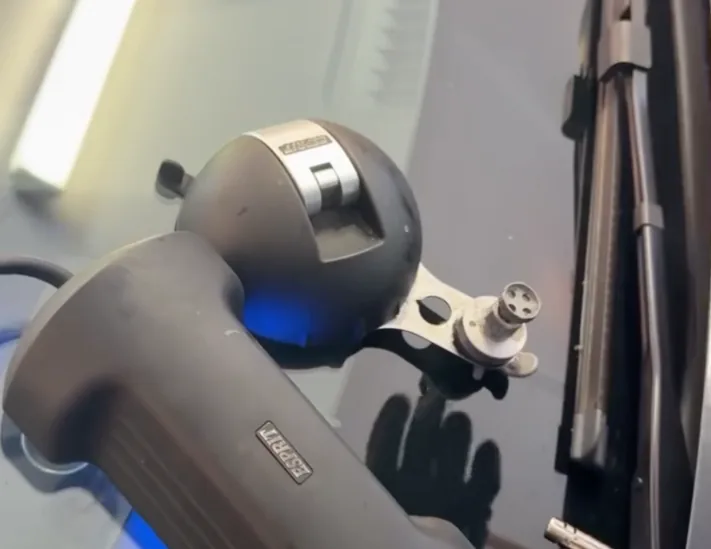
Stone chip repair
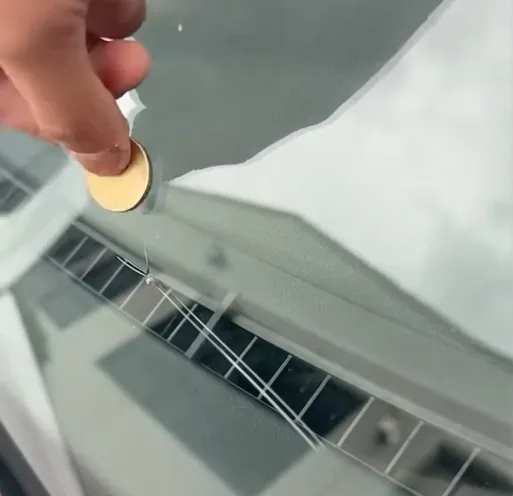
Most of the damage we repair starts as a stone thrown up by a truck or another vehicle, and it leaves a small break with a name: a bullseye is a round cone shaped break, a star break throws short legs out from the point of impact, a half moon is a partial bullseye, and a combination break is a bullseye with legs running from it. What matters more than the name is the size, and we use a test you can run yourself before calling. On the passenger side of the windscreen we can repair damage smaller than a ten cent coin. Directly in front of the driver the limit is tighter, and the damage needs to be smaller than a five cent coin. Anything larger than that is a replacement rather than a repair, and we would rather tell you so than attempt something that will not hold. A chip repaired soon after it happens also gives a better result than the same chip repaired months later, because the break fills with dirt, water and wax over time and resin bonds to clean glass.
- Smaller than a ten cent coin on the passenger side
- Smaller than a five cent coin in front of the driver
- Bullseye, star, half moon and combination breaks
- Multiple chips in one visit
- Repaired at your home or workplace
- No wait before driving
Cracks, and why they usually mean replacement
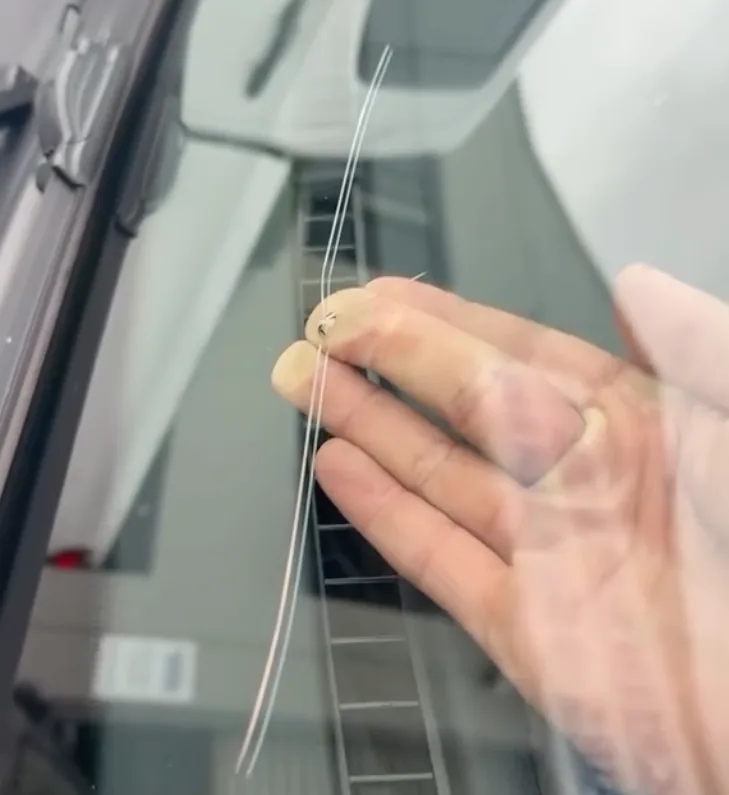
A crack is what a chip becomes if it is left, and by the time damage has run into a crack it has almost always passed the size at which a repair will hold. Our limit is the same coin test: damage larger than a ten cent coin on the passenger side, or a five cent coin in front of the driver, is a replacement. Cracks reaching the edge of the glass are the least recoverable of all, because the edge is where the windscreen carries load and where it bonds to the body. Australian repair practice also sets tighter limits in the driver's line of sight than elsewhere on the screen, which is why the same damage can be borderline on one side of the windscreen and clearly beyond repair on the other. If your damage has already run, the useful thing we can do is tell you straight and quote the replacement rather than sell you a repair that fails.
- Damage past the coin test is a replacement
- Edge cracks carry the highest structural risk
- Tighter limits in the driver's line of sight
- Assessed against Australian repair practice
- A straight repair or replace answer, not a sales pitch
Repair or replace, and how we decide
The question every caller asks first is whether the windscreen can be saved. The honest answer depends on the size of the damage, where it sits on the glass, how close it is to the edge, and whether it has penetrated past the outer layer, and none of that can be judged over the phone from a description. This is why the quote form below takes a photo: a clear close up of the chip, and a second shot showing where it sits, is usually enough for a straight answer without anyone driving anywhere. On top of that sits the law. Transport for NSW sets out what windscreen damage is acceptable in the area in front of the driver as part of the light vehicle inspection standards, and the rule permits only two of three defined types of damage in that area. Damage beyond that will fail an inspection whether or not it could technically be repaired. The same rule also applies after a repair: a repaired windscreen must not carry visible damage beyond those limits either, which is a detail most people are never told. We assess against both, so you get an answer covering the repair and the roadworthiness together.
- Size, position, edge distance and depth assessed
- Checked against the driver's critical vision area
- The inspection rule applies after a repair, not just before
- A straight answer before any work starts
- Send a photo and we can usually answer before we come out
- No callout fee and no assessment fee, anywhere we work
What a repair involves
Assessed before anything starts
We tell you honestly whether the damage can be repaired or needs replacing.
Resin injected under vacuum
Air is drawn out of the break and clear resin drawn in to bond the glass.
Cured hard on the spot
The resin is cured with ultraviolet light, so there is no waiting to drive.
Your original glass stays in
No new glass, no new seal, and no camera recalibration to arrange.
Get a free quote
Attach a photo of the damage and we can usually tell you whether it can be repaired before anyone comes out. Park so the light is behind you rather than in front, get close enough that the chip fills most of the frame, and take a second shot from further back showing where on the windscreen it sits. Those two pictures answer nearly every question we would otherwise have to call you about.
Service available across every Sydney region
Central and Inner Sydney
Sydney CBD, Circular Quay, The Rocks, Surry Hills, Darlinghurst, Kings Cross, Newtown, Marrickville, Enmore, Alexandria and Waterloo
The East and Northern Beaches
Bondi, Coogee, Maroubra, Manly, Dee Why and Narrabeen
North Shore and Northern Suburbs
Mosman, Chatswood, North Sydney and the Hills District including Baulkham Hills
South and West Sydney
Cronulla, Hurstville, Brighton Le Sands, Parramatta, Penrith, Campbelltown and Camden
Frequently asked questions
Can my windscreen chip be repaired, or do I need a new windscreen?
The quickest test is a coin. On the passenger side of the windscreen we can repair damage smaller than a ten cent coin. Directly in front of the driver the limit is tighter and the damage needs to be smaller than a five cent coin. Anything larger is a replacement. Damage near the edge of the glass is also less likely to be repairable, because that is where the windscreen carries load. Send a photo through the quote form on this page and we can usually give you a straight answer before anyone comes out.
Is it illegal to drive with a chipped or cracked windscreen in New South Wales?
There is no blanket ban, but there are limits. The Transport for NSW light vehicle inspection standards set out what damage is acceptable in the windscreen area in front of the driver, and only two of three defined damage types are permitted there. Damage beyond that will fail a safety inspection and can attract a defect notice. The figures circulating online for each damage type mostly come from secondary sources rather than the rule itself, so rather than repeat a number we cannot stand behind, send us a photo and we will tell you where your damage sits.
Does the inspection rule still apply after my chip is repaired?
Yes, and almost nobody is told this. The same rule covers windscreens repaired with clear resin, and after a repair there must be no visible damage remaining beyond the limits it sets. A repair that leaves too much visible damage in the area in front of the driver can still fail an inspection. It is another reason to deal with a chip while it is small, since a clean repair on fresh damage leaves far less behind than the same repair months later.
Will I need my safety camera recalibrated after a chip repair?
No. Recalibration is required after a windscreen is replaced, because the camera behind the glass has to be re aimed against a new screen. A repair leaves the original windscreen in place and the camera undisturbed, so there is nothing to recalibrate. This is one of the practical reasons to repair a chip early rather than waiting until it becomes a replacement.
How long does a windscreen chip repair take, and can I drive straight afterwards?
About half an hour, and yes, you can drive straight afterwards. The resin is cured hard with ultraviolet light before we finish, so unlike a windscreen replacement there is no adhesive curing and no waiting period before the vehicle is safe to drive.
What does a chip repair cost?
A single chip repair is between $90 and $150, and further chips repaired in the same visit are around $50 each. Before you pay anything, check your insurance: comprehensive policies commonly include glass cover, and many insurers offer optional windscreen cover that reduces or removes the excess on a glass claim, so for a lot of customers a chip repair costs nothing. Your product disclosure statement is where that is spelled out.
Will the repair be invisible?
No, and anyone promising invisible is overselling it. A repair restores the strength of the glass and stops the damage spreading, and it improves the appearance considerably, but a faint mark usually remains where the break was. The purpose of the repair is structural and to prevent a crack, with the cosmetic improvement as a benefit rather than the goal.
Does my insurance cover a windscreen chip repair?
Often, but it depends entirely on your policy. We work with all major Australian insurers. Comprehensive policies commonly include glass cover, and many offer optional windscreen cover that reduces or removes the excess on a glass claim. Whether a glass claim affects your no claim discount also varies. Check your product disclosure statement to confirm windscreen work is covered before you book. The claim itself is lodged by you as the vehicle owner rather than by us.
Can you repair more than one chip in the same windscreen?
Usually yes, and additional chips in the same visit are cheaper than the first. There is a practical limit though, and it is lower in the area directly in front of the driver, where Australian repair practice restricts how many repairs a windscreen should carry. Where there is too much damage to repair safely, replacement is the right answer and we will tell you so.
Ready to get started?
Get a fast, free quote, or call now and speak to someone who can help.