Windscreen replacement across Sydney
A windscreen is structural. It braces the roof in a rollover and it is the surface the passenger airbag pushes against when it deploys, which is why replacing one is a bonding job rather than a glazing job. We replace windscreens at your home or workplace anywhere in Sydney. The old glass and the old urethane come out, the pinch weld is cleaned back and primed, and new glass is set into a fresh bead of automotive urethane. That adhesive then has to cure before the glass can do its structural job again, and we stay with the vehicle while it does, so the car is ready to drive when we finish rather than at some point after we have gone. Where your vehicle has a camera mounted behind the glass, that camera has to be recalibrated afterwards, and we cover that below.
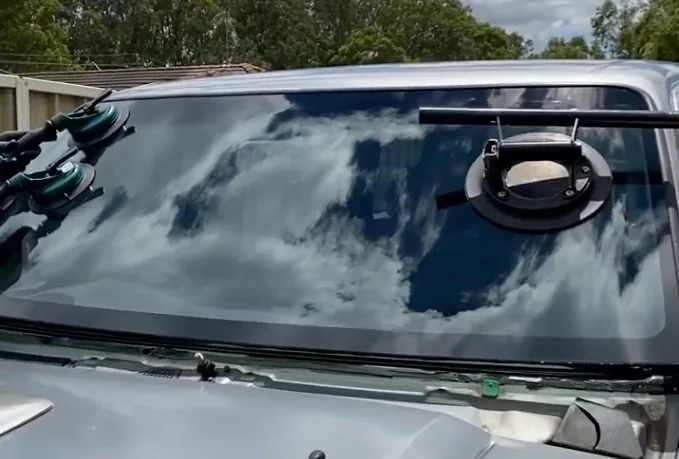
Windscreen replacement at your home or workplace
We bring the glass, the adhesive and the tools to you, so the vehicle does not have to be driven anywhere with a damaged windscreen. What we do need is somewhere dry and reasonably sheltered, with room to open both front doors and work around the front of the vehicle. A garage, a carport or a covered space at work is ideal. This is not a preference: urethane adhesive will not bond reliably to a wet surface, so rain on the bonding area is the one thing that will make us reschedule rather than push on. Extreme heat and strong wind can do the same, because heat affects how the adhesive behaves and wind makes handling a large sheet of glass unsafe.
- Fitted at home or at work
- About two and a half hours on site, three with recalibration
- Dry, sheltered space needed
- Rain will mean rescheduling rather than a rushed job
- Room to open both front doors
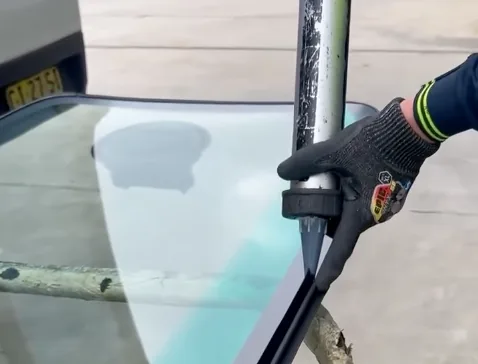
The glass we fit, and what the markings mean
Automotive glazing sold in Australia has to comply with Australian Design Rule 8/01, which requires it to meet AS/NZS 2080 or a recognised equivalent international standard, and compliant glass carries an etched compliance mark in one corner showing which standard it was made to. That mark is worth knowing about, because it is the one thing on a windscreen a customer can check themselves. Beyond compliance, glass is usually described three ways: original equipment glass made by the manufacturer's own supplier and carrying their branding, equivalent glass made to the same specification by another maker without that branding, and general aftermarket glass which varies more. We fit original equipment glass as standard. That is worth saying plainly because most of the trade will not commit to a grade in writing, and because the difference matters most on a vehicle with a camera behind the screen, where optical quality in the camera's viewing area is part of what the manufacturer specified. Where a vehicle is old enough or rare enough that original equipment glass is no longer produced, we will tell you what the alternative is before we book it rather than after.
- Original equipment glass fitted as standard
- Compliant with Australian Design Rule 8/01
- Meets AS/NZS 2080 or a recognised equivalent
- Compliance mark etched into the glass
- Told upfront if original equipment glass is not available for your vehicle
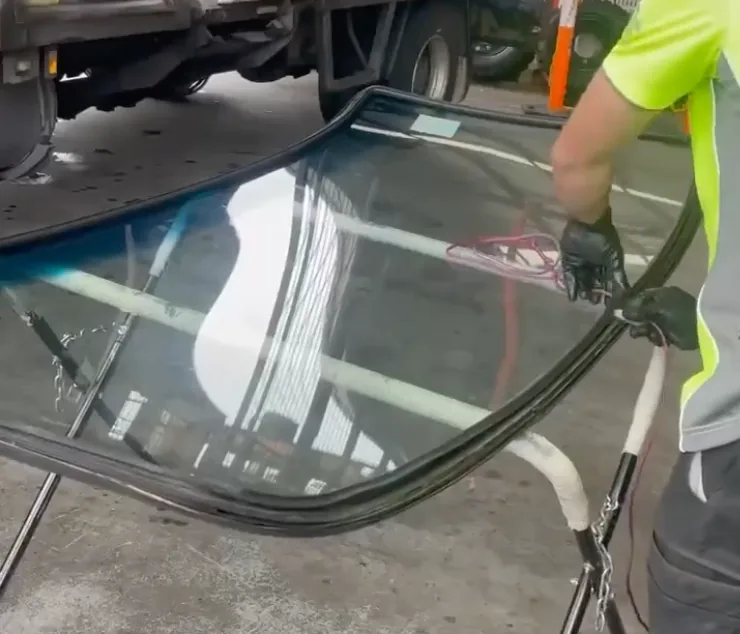
When the car is ready, and the first few days
Safe drive away time is the point at which the urethane has cured enough to hold the windscreen in a crash and to support the passenger airbag when it deploys. It is real, it is not a formality, and it cannot be hurried. What we do differently is wait it out with you. The technician stays with the vehicle through the cure instead of fitting the glass, handing the keys back and leaving you to work out when the car is safe. Your car is ready to drive when we finish. We do not leave until the adhesive has cured to the point the glass is doing its structural job again. That is a large part of why a replacement is about two and a half hours on site rather than one, and about three where the camera also has to be recalibrated. Temperature and humidity change how long the adhesive needs, which is one reason we do not publish a figure: we wait on the adhesive rather than on the clock. For the first day or two afterwards, leave any retention tape in place, avoid slamming doors with the windows fully closed, since the pressure spike pushes against adhesive that is still hardening, and keep the vehicle out of a high pressure car wash.
- The cure happens while we are still with the vehicle
- Ready to drive when we finish, not hours after we leave
- About two and a half hours on site, three with recalibration
- Leave retention tape in place
- Avoid slamming doors with the windows shut
- No high pressure car wash for the first days
What a replacement involves
Original equipment glass as standard
Not an upgrade offered at extra cost, but what we fit by default.
Pinch weld cleaned and primed
Old urethane cut back properly, because the bond is only as good as what it sticks to.
Ready to drive when we finish
We do not leave until the adhesive has cured enough to hold the glass.
Camera recalibration where needed
A new windscreen means the driver assistance camera has to be re aimed.
Get a free quote
Tell us the make, model and build year, and we can quote the glass. The build date matters more than the model year, because the same model can be built with and without a camera behind the windscreen, and that camera changes both the glass and the work involved. If you are not sure, attach a photo taken from inside the vehicle looking up at the top centre of the windscreen, just in front of the mirror. Whatever is mounted there tells us what we need to know.
Service available across every Sydney region
Central and Inner Sydney
Sydney CBD, Circular Quay, The Rocks, Surry Hills, Darlinghurst, Kings Cross, Newtown, Marrickville, Enmore, Alexandria and Waterloo
The East and Northern Beaches
Bondi, Coogee, Maroubra, Manly, Dee Why and Narrabeen
North Shore and Northern Suburbs
Mosman, Chatswood, North Sydney and the Hills District including Baulkham Hills
South and West Sydney
Cronulla, Hurstville, Brighton Le Sands, Parramatta, Penrith, Campbelltown and Camden
Frequently asked questions
How soon can I drive after a windscreen replacement?
When we finish. That is not a shortcut and it is not a claim about the adhesive: urethane has to reach a minimum strength before the windscreen can hold in a crash and support the passenger airbag, and that point is the safe drive away time. The difference is that we stay with the vehicle through the cure rather than leaving you to sit it out on your own, so the waiting happens inside the job instead of after it. Temperature and humidity change how long the adhesive needs, so we wait on the adhesive rather than on a figure printed on a tin.
Will I need my driver assistance camera recalibrated afterwards?
If your vehicle has a camera mounted behind the windscreen, yes. That camera feeds systems such as lane keep assist, autonomous emergency braking, adaptive cruise control and traffic sign recognition, and it is aimed relative to the glass it sits behind. Replace the glass and the aim changes, so the camera has to be recalibrated to the manufacturer's procedure. Cameras behind the windscreen became common on Australian vehicles from around 2017 onwards.
Can you replace a windscreen at my house if it is raining?
No, and any business that says yes is cutting a corner. Urethane adhesive will not bond reliably to a wet surface, and the bond is what holds the windscreen in during a crash. If we cannot get the vehicle somewhere dry and sheltered, such as a garage or carport, we reschedule rather than fit it in poor conditions. Strong wind and extreme heat can cause the same decision.
Do you fit original equipment glass or aftermarket?
Original equipment glass as standard, which means glass from the vehicle manufacturer's own supplier rather than a copy made to the same shape. All automotive glass legally fitted in Australia has to comply with Australian Design Rule 8/01 and carry an etched compliance mark, so aftermarket glass is not unsafe, but original equipment is what your vehicle was designed around, and on a car with a camera behind the screen the optical quality in that part of the glass is part of the specification. Where a vehicle is old or rare enough that original equipment glass is no longer made, we will tell you what the alternative is before booking rather than substituting quietly.
How long does a windscreen replacement take?
About two and a half hours on site for a plain replacement, and about three where your vehicle needs its camera recalibrated afterwards. That includes the time the adhesive spends curing, because we stay with the vehicle rather than leaving and asking you to wait, so the car is ready to drive when we finish. It is a long time to have a car occupied and it is worth knowing before you book. Most people leave it at home or in the work carpark and get on with the day.
Does my insurance cover a windscreen replacement?
It depends on your policy. Comprehensive policies commonly include glass cover, and many Australian insurers offer optional windscreen cover that reduces or removes the excess on a glass claim. Whether a glass claim affects your no claim discount, and whether you can choose your own repairer rather than use the insurer's network, varies between insurers. We work with all the major Australian insurers, though the claim is lodged by you as the vehicle owner rather than by us, and your product disclosure statement rather than your repairer decides what is actually covered.
What is the black dotted border around the edge of a windscreen for?
That band is called the frit. It is a ceramic layer baked into the glass, and it does two jobs. It hides the urethane adhesive bead and the edge of the trim so the join looks finished, and more importantly it shields the adhesive from ultraviolet light, which would otherwise break the bond down over time. The dots that fade inwards from it spread the temperature change across the glass so the frit does not heat at a different rate to the clear area.
Ready to get started?
Get a fast, free quote, or call now and speak to someone who can help.